Exploring the Rights of Children
The Status of "Child"
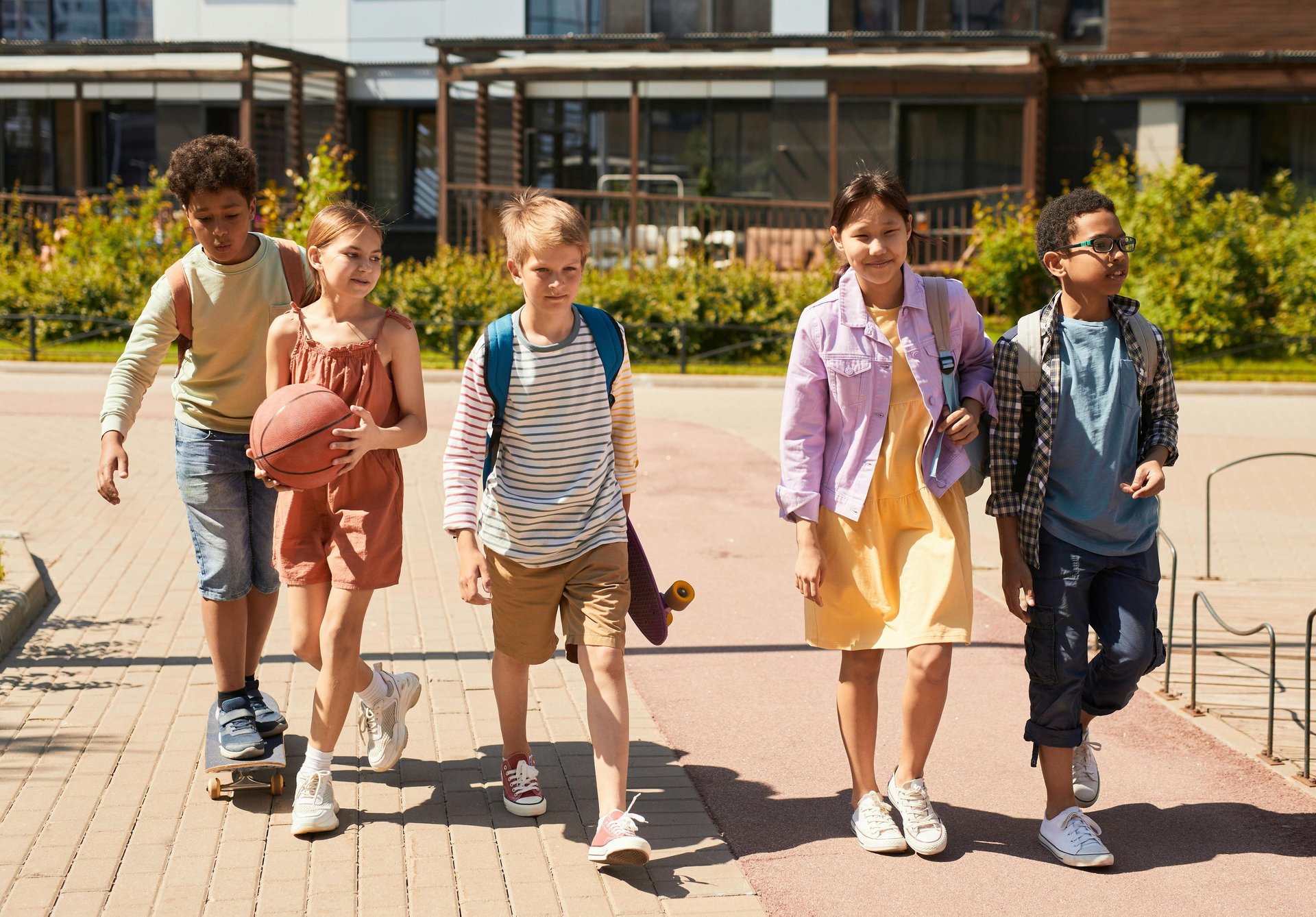
What do you think of when you hear the word Child? You might think of age. You might think of physical traits: small, little, cute. You might be reminded of admirable traits: loving, funny, silly, creative. Something you might not think about is yourself. Did you consider the fact that you were once a child?
This is a crucial concept to grasp when considering the rights of children. "Child" is a status that every single person in human history has been or is still a part of. It is not a status that is stolen from us but is instead ours to hold and cherish in the time that it is available. When we grow up, that experience becomes a more distant memory, clouded by the experiences and knowledge we have now. It is important that we do not forget about the child we once were. When we connect to our own experiences as a child, the rights of children shine through.
“We were all children once. And we all share the desire for the well-being of our children, which has always been and will continue to be the most universally cherished aspiration of humankind.”
-Kofi Annan
Children Have Special Rights
Every human being is born with inherent rights, but did you know that individuals who hold the status of "Child" actually have special rights? There is an important reason for this.
A Vulnerable Group
Children are a vulnerable group of individuals who have the right to be safe and protected from unexpected risks and hazards. Their vulnerability comes in their physical stature, strength, and abilities. It also comes from their still-growing knowledge of the world, the people in it, and how it works. Though it is the most vulnerable time in a person's life, childhood is also revered as a sacred moment. Our time from birth to 18 is filled with rich growth, learning, and connections to self and others. This valuable learning cannot happen in a vacuum where children are directed by adults. While the concern to protect children from the hazards of the world comes from a place of love, our desire to protect children can actually deprive them of their right to participate.
Our Youngest Citizens
Children are present day citizens, who exist here and now, not future citizens. They are impacted by the policies and decisions made by leaders and the government, yet there is an unofficial message being sent to children and their families. That message is "You are too young to understand, wait till you grow up." This is a fatal flaw. How are we supposed to raise and prepare our youngest citizens to engage in their civic duties and speak up for what matters, if we take away their right to do so? Children have the right to be active participants engaged in their communities, whose ideas are heard, supported, and elevated. Children's voices should be present in all matters that affect them. It is important to delineate that having a voice in a matter does not mean having final say in decisions. It is our responsibility to guide and assist children in being seen and heard in spaces and decisions that involve them.
Whole and Complete Individuals
There is a misconception that children are considered partial or incomplete persons. This inaccuracy squanders the rights of children by neglecting to acknowledge their status as a whole and complete individual with unique thoughts, desires, and beliefs. Children are present here and now, and that's what matters. If we ignore or dismiss their voices and the value they bring to our communities, simply because of their status as a child, we are doing a disservice to everyone.
Before You Read
While exploring a child's rights, it isn't uncommon for emotions to arise. You may feel reflective on your own childhood, possibly unsettled by the realities of children's lives, or you may become critical of your own practices. While these feelings can be uncomfortable, this resource is not intended for you to leave feeling worse about your practices with children. We are here to plant the seed of child rights in Idaho. Together we can grow a community where children's voices are heard and valued.
Below, you will view the content included in the United Nations Convention on the Rights of the Child (UNCRC). This is the most widely ratified human rights treaty in history. It was adopted in 1990, and since then, 195 countries have signed and ratified the treaty. It is important to note that the United States is the only member of the UN that has signed the UNCRC and has not yet ratified it.
UN Convention on the Rights of the Child
1. Definition of a child
A child is any person under the age of 18.
2. No discrimination
All children have all these rights, no matter who they are, where they live, what language they speak, what their religion is, what they think, what they look like, if they are a boy or girl, if they have a disability, if they are rich or poor, and no matter who their parents or families are or what their parents or families believe or do. No child should be treated unfairly for any reason.
3. Best interests of the child
When adults make decisions, they should think about how their decisions will affect children. All adults should do what is best for children. Governments should make sure children are protected and looked after by their parents, or by other people when this is needed. Governments should make sure that people and places responsible for looking after children are doing a good job.
4. Making rights real
Governments must do all they can to make sure that every child in their countries can enjoy all the rights in this Convention.
5. Family guidance as children develop
Governments should let families and communities guide their children so that, as they grow up, they learn to use their rights in the best way. The more children grow, the less guidance they will need.
6. Life survival and development
Every child has the right to be alive. Governments must make sure that children survive and develop in the best possible way.
7. Name and nationality
Children must be registered when they are born and given a name which is officially recognized by the government. Children must have a nationality (belong to a country). Whenever possible, children should know their parents and be looked after by them.
8. Identity
Children have the right to their own identity – an official record of who they are which includes their name, nationality and family relations. No one should take this away from them, but if this happens, governments must help children to quickly get their identity back.
9. Keeping families together
Children should not be separated from their parents unless they are not being properly looked after – for example, if a parent hurts or does not take care of a child. Children whose parents don’t live together should stay in contact with both parents unless this might harm the child.
10. Contact with parents across countries
If a child lives in a different country than their parents, governments must let the child and parents travel so that they can stay in contact and be together.
11. Protection from kidnapping
Governments must stop children being taken out of the country when this is against the law – for example, being kidnapped by someone or held abroad by a parent when the other parent does not agree.
12. Respect for children's views
Children have the right to give their opinions freely on issues that affect them. Adults should listen and take children seriously.
13. Sharing thoughts freely
Children have the right to share freely with others what they learn, think and feel, by talking, drawing, writing or in any other way unless it harms other people.
14. Freedom of thought and religion
Children can choose their own thoughts, opinions and religion, but this should not stop other people from enjoying their rights. Parents can guide children so that as they grow up, they learn to properly use this right.
15. Setting up or joining groups
Children can join or set up groups or organizations, and they can meet with others, as long as this does not harm other people.
16. Protection of privacy
Every child has the right to privacy. The law must protect children’s privacy, family, home, communications and reputation (or good name) from any attack.
17. Access to information
Children have the right to get information from the Internet, radio, television, newspapers, books and other sources. Adults should make sure the information they are getting is not harmful. Governments should encourage the media to share information from lots of different sources, in languages that all children can understand.
18. Responsibility of parents
Parents are the main people responsible for bringing up a child. When the child does not have any parents, another adult will have this responsibility and they are called a “guardian”. Parents and guardians should always consider what is best for that child. Governments should help them. Where a child has both parents, both of them should be responsible for bringing up the child.
19. Protection from violence
Governments must protect children from violence, abuse and being neglected by anyone who looks after them.
20. Children without families
Every child who cannot be looked after by their own family has the right to be looked after properly by people who respect the child’s religion, culture, language and other aspects of their life.
21. Children who are adopted
When children are adopted, the most important thing is to do what is best for them. If a child cannot be properly looked after in their own country – for example by living with another family – then they might be adopted in another country.
22. Refugee children
Children who move from their home country to another country as refugees (because it was not safe for them to stay there) should get help and protection and have the same rights as children born in that country.
23. Children with disabilities
Every child with a disability should enjoy the best possible life in society. Governments should remove all obstacles for children with disabilities to become independent and to participate actively in the community.
24. Health, water, food, environment
Children have the right to the best healthcare possible, clean water to drink, healthy food and a clean and safe environment to live in. All adults and children should have information about how to stay safe and healthy.
25. Review of a child's placement
Every child who has been placed somewhere away from home - for their care, protection or health – should have their situation checked regularly to see if everything is going well and if this is still the best place for the child to be.
26. Social and economic help
Governments should provide money or other support to help children from poor families.
27. Food, clothing, a safe home
Children have the right to food, clothing and a safe place to live so they can develop in the best possible way. The government should help families and children who cannot afford this.
28. Access to education
Every child has the right to an education. Primary education should be free. Secondary and higher education should be available to every child. Children should be encouraged to go to school to the highest level possible. Discipline in schools should respect children’s rights and never use violence.
29. Aims of education
Children’s education should help them fully develop their personalities, talents and abilities. It should teach them to understand their own rights, and to respect other people’s rights, cultures and differences. It should help them to live peacefully and protect the environment.
30. Minority culture, language and religion
Children have the right to use their own language, culture and religion - even if these are not shared by most people in the country where they live.
31. Rest, play, culture, arts
Every child has the right to rest, relax, play and to take part in cultural and creative activities.
32. Protection from harmful work
Children have the right to be protected from doing work that is dangerous or bad for their education, health or development. If children work, they have the right to be safe and paid fairly.
33. Protection from harmful drugs
Governments must protect children from taking, making, carrying or selling harmful drugs.
34. Protection from sexual abuse
The government should protect children from sexual exploitation (being taken advantage of) and sexual abuse, including by people forcing children to have sex for money, or making sexual pictures or films of them.
35. Prevention of sale and trafficking
Governments must make sure that children are not kidnapped or sold, or taken to other countries or places to be exploited (taken advantage of).
36. Protection from exploitation
Children have the right to be protected from all other kinds of exploitation (being taken advantage of), even if these are not specifically mentioned in this Convention.
37. Children in detention
Children who are accused of breaking the law should not be killed, tortured, treated cruelly, put in prison forever, or put in prison with adults. Prison should always be the last choice and only for the shortest possible time. Children in prison should have legal help and be able to stay in contact with their family.
38. Protection in war
Children have the right to be protected during war. No child under 15 can join the army or take part in war.
39. Recovery and reintegration
Children have the right to get help if they have been hurt, neglected, treated badly or affected by war, so they can get back their health and dignity.
40. Children who break the law
Children accused of breaking the law have the right to legal help and fair treatment. There should be lots of solutions to help these children become good members of their communities. Prison should only be the last choice.
41. Best law for children applies
If the laws of a country protect children’s rights better than this Convention, then those laws should be used.
42. Everyone must know children's rights
Governments should actively tell children and adults about this Convention so that everyone knows about children’s rights.
43 to 54. How the Convention works
These articles explain how governments, the United Nations – including the Committee on the Rights of the Child and UNICEF - and other organizations work to make sure all children enjoy all their rights.
Created using information from UNICEF and Seen and. A complete list of references for continued reading can be found under the " About " tab.
Questions or Concerns? Contact us at
© 2026. All rights reserved.
Help us spread the word to inform every child of their rights!